
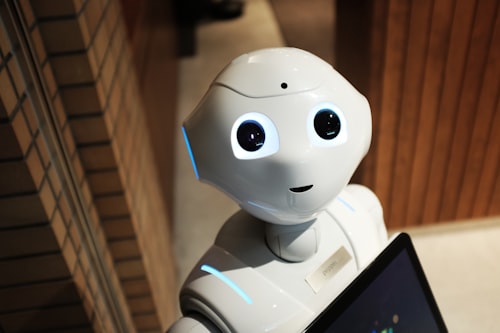
Robotics is becoming an important part of modern technology. From robots assisting in hospitals to machines performing complex tasks in manufacturing facilities, robotic technology is changing how people work and interact with machines.
With advancements in Artificial Intelligence, Machine Learning, and sensor technology, robots are becoming more intelligent, flexible, and capable of performing different activities. But what exactly is robotics development, and how is it shaping the future of technology?
What Is Robotics Development?
Robotics development is the process of designing, building, programming, and testing robots to perform specific tasks. It combines mechanical engineering, electronics, computer programming, sensors, and artificial intelligence.
Unlike ordinary machines that perform predefined operations, modern intelligent robots can use sensors and software to understand their surroundings and respond to different situations.
For example, a reception robot can interact with visitors, provide information, and guide people to the appropriate department.
What Are the Different Types of Robots?
Robots are designed for different purposes depending on their environment and applications.
Industrial Robots
Used in manufacturing environments for welding, assembling, painting, and material handling.
Service Robots
Assist people with everyday activities such as customer support, cleaning, delivery, and information services.
Humanoid Robots
Designed with human-like features to interact with people and perform selected human-oriented tasks.
Autonomous Mobile Robots (AMRs)
Navigate environments independently and transport materials or products in warehouses and other facilities.
Educational Robots
Help students understand programming, electronics, engineering, and robotics through practical learning activities.
Where Is Robotics Technology Used?
Robotics is expanding across different industries and creating new possibilities for businesses and organisations.
- Healthcare: Robots assist with rehabilitation, medical logistics, and selected surgical procedures under professional supervision.
- Education: Educational robots support practical learning in coding, electronics, and STEM subjects.
- Manufacturing: Robotic systems perform assembly, inspection, packaging, and material handling.
- Hospitality: Service robots can welcome visitors, provide information, and assist with delivery activities.
- Retail and Advertising: Interactive robots can engage customers, display information, and support promotional activities.
How Does Artificial Intelligence Improve Robotics?
Artificial Intelligence makes robots more capable of understanding information and responding to their surroundings.
Computer vision helps robots identify objects and recognise visual information. Machine Learning allows robotic systems to identify patterns and improve selected tasks using data. Natural Language Processing enables robots to understand spoken or written instructions and communicate with people.
When these technologies are integrated, robots can perform more intelligent activities instead of relying entirely on fixed instructions.
What Technologies Are Required for Robotics Development?
Developing modern robotic systems requires knowledge of multiple technologies.
- Python and C++: Used for robot programming and software development.
- Artificial Intelligence: Helps robots perform intelligent tasks and support decision-making.
- Computer Vision: Enables robots to identify objects and understand visual environments.
- Sensors and Electronics: Help robots detect movement, distance, obstacles, and environmental conditions.
- Machine Learning: Supports pattern recognition and intelligent behaviour.
- Robot Operating System (ROS): Provides software libraries and tools for developing robotic applications.
Combining these technologies helps developers create robots for different practical applications.
What Is the Future of Robotics Technology?
The future of robotics is moving towards intelligent, autonomous, and human-interactive systems.
AI-powered robots will increasingly support customer service, healthcare, education, logistics, and business operations. Collaborative robots will work alongside people in suitable environments, while autonomous robots will perform more complex navigation and transportation tasks.
As AI, sensor technology, and robotics software continue to advance, businesses will have more opportunities to develop customised robotic solutions for their specific requirements.
Conclusion
Robotics development is transforming the relationship between people, machines, and technology. From educational robots to intelligent service robots, these systems are creating new opportunities to improve productivity, support daily activities, and solve practical challenges.
At NextGenPro Innovations and Edupark Pvt. Ltd., we focus on modern technology solutions, including robotics development, AI development, IoT solutions, and enterprise software.
With over 16 years of experience in technology and software solutions, we aim to develop practical solutions that support business innovation and digital transformation.
Explore our robotics and technology solutions at NextGenPro and discover how intelligent robotics can create new possibilities for your business.
Explore Robotics & AI Solutions at NextGenPro
Discover how NextGenPro builds custom robotics, AI, IoT, and enterprise software solutions for modern businesses and institutions.

